Section 8 of 9
Exterior
Roof rack and awning
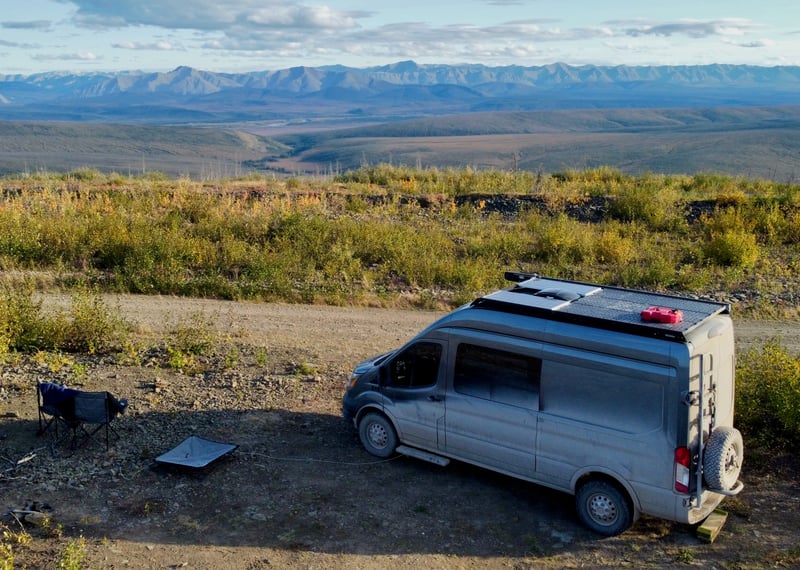
The roof rack is from Remora, a Quebec company making modular van gear. We’ve been happy with it — good quality, well designed, and the modular system meant we could sort out the awning problem that nobody tells you about when you’re buying a Transit.
Here’s the thing: the Transit has a very long ‘forehead.’ The roof peaks well back from the sliding door, so the most roof racks sit about 18 inches behind where the door opening ends. Mount an awning in the default spot — which is what most people do — and you’ll get shade but there’s a pretty big gap on the right hand side of the door that still gets rained on. We’ve seen a lot of Transit builds with awnings in the ‘default’ position and it puzzles us — have they not been rained on yet?
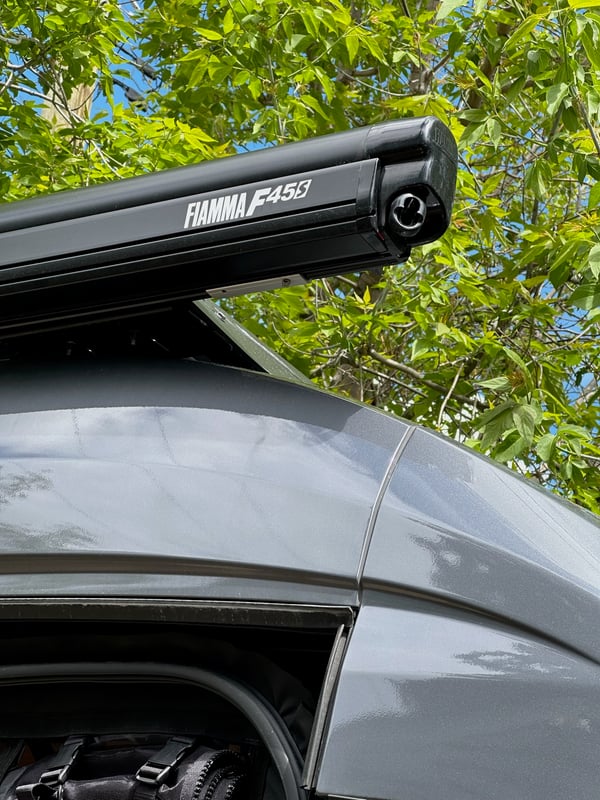
Remora makes a rack extension that pushes the awning forward far enough to actually cover the sliding door. The awning ends up poking out a bit further than looks quite normal, and you have to watch for low branches, but the doorway gets much better coverage. Our awning is a Fiama F45S manual awning (no-one needs electric)
The roof rack also gives us a clean mount for the solar panels, and as a side benefit it’s what makes the van look like something other than an Amazon delivery vehicle.
Bug screens
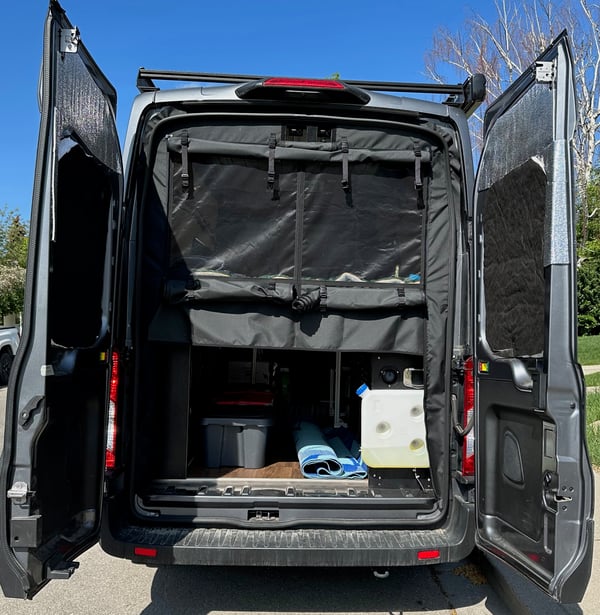
Bug Wall, made in the USA, which when we bought them was a selling point. They’re about 30% cheaper than Rolef and still quite good.
For the sliding door screen, you choose whether the magnetic opening sits in the middle, left, or right. We chose right — the right call depends on your galley layout and how much clearance you have on that side. For the rear doors, you send them measurements and photos of your bed setup and they make the screen to the right height: mesh above the mattress line, solid material below.
We love these and would call them required equipment. That said, we don’t think you need top-of-the-line versions specifically. Bug Wall and Rolef are the names you’ll see most often, but there are cheaper options that will probably work fine — just likely less robust over time.
Roof deck
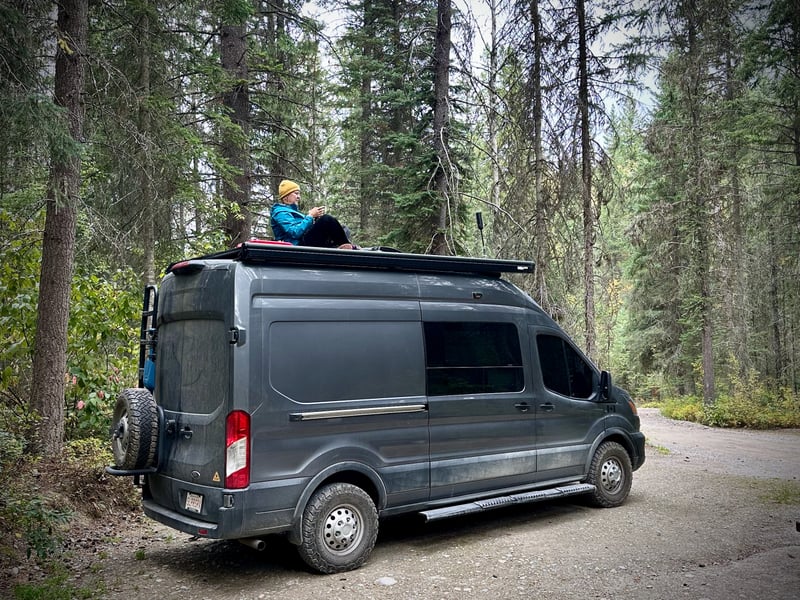
Remora fabricated custom powder-coated aluminum deck panels to our spec. They cover about two thirds of the roof, with room for two people easily and three if you’re friendly.
It’s tall up there and there’s not much to hang onto. We’ve talked about making a sign: “this bar, two drink maximum.” But watching the sunset from the top of the van is one of those things that genuinely doesn’t get old, and we love the deck.
Rear door tire carrier and ladder
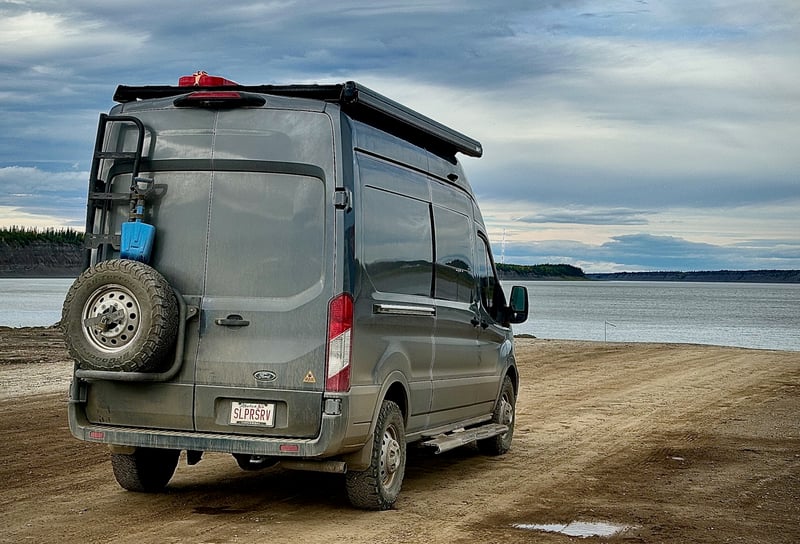
We have an Owl Vans tire carrier on the rear door with an integrated ladder, which is how you get up to the roof. Some people put a side ladder on the van, which is reasonable too. We went with rear-integrated partly because it’s less immediately obvious that you can climb it. Not actually more secure, just slightly less of an invitation.
Suspension and tires
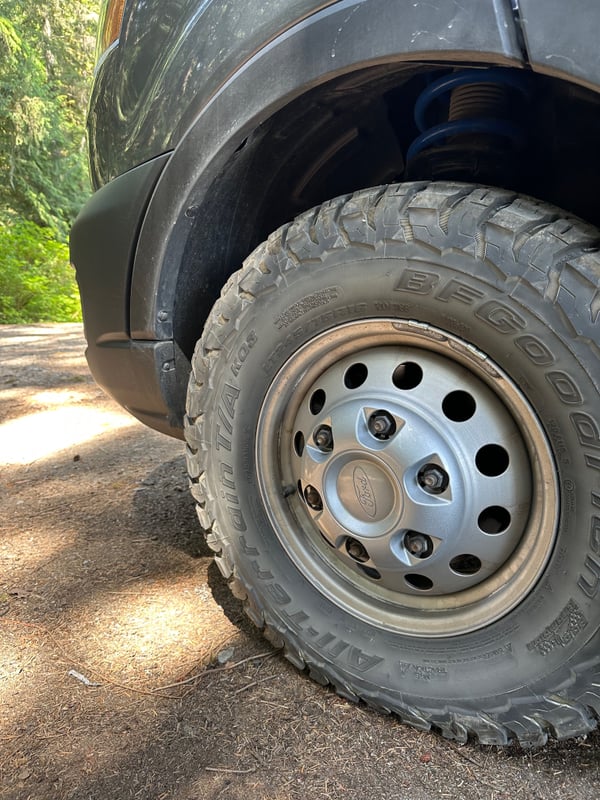
Ours were done by Wilderness Vans in Lethbridge, a full custom van shop close to Calgary that also handles upgrades and accessories. They installed the Van Compass Topo Stage 4 kit — new front springs and spacers, extra rear leaf pack, adjustable rear shocks, roughly two inch lift.
The handling difference is noticeable in a way we didn’t expect. Body roll is essentially gone. We didn’t think the stock handling was particularly bad before, but handling is something I think about a lot less nowadays.
The tires are KO3 all-terrains. They did the Dempster without complaint. Fair warning on the road noise: it’s genuinely surprising. The first few drives we thought something was wrong with the drivetrain — a high-pitched whomp whomp whomp at highway speed that doesn’t go away. That’s just the KO3s. Quieter all-terrain options exist, but they are probably slightly worse off-road. We’d choose the KO3s again.
The lift, and especially the tires, also change how the van looks. It goes from cargo van to something a bit more “grrrr” and that’s cool. I spent half the time on the Dempster trip taking portraits of the van looking rugged.
Running boards
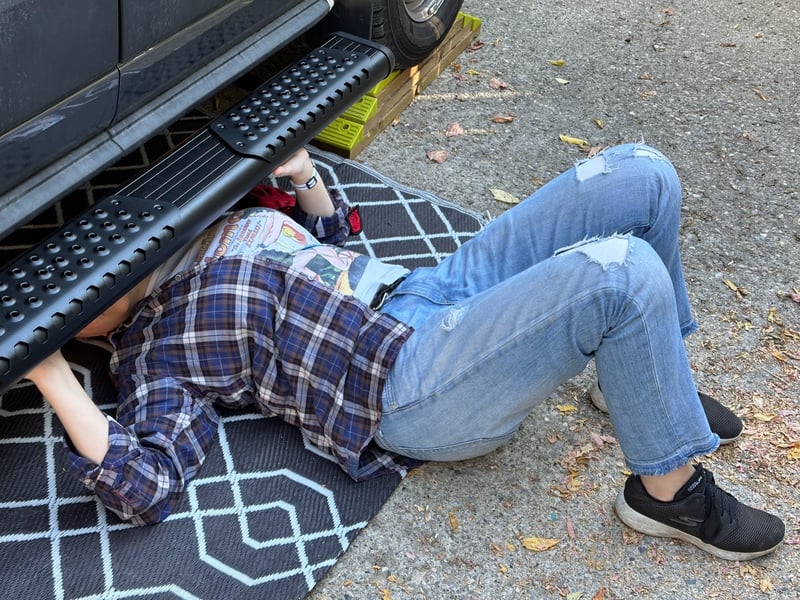
The slider side has a full-length running board that covers both the passenger door and the sliding door — one consistent step height wherever you’re getting in. The driver side gets a shorter matching step-style board, same look, proportionate to the door.
The slider board has some character now. We had a disagreement with Going to the Sun road in Glacier National Park and the running board bore the brunt of it. Scraped up, not broken. Still does the job fine.
We underestimated these before we had them. Stepping in and out of a Transit fifty times a day, a solid step at a consistent height becomes one of those things you notice immediately in any other tall vehicle. The dog figured it out on day one.
What we haven’t done yet
Brakes: we haven’t upgraded them and so far we haven’t needed to. Our approach is engine braking — manually selecting a lower gear on the way down a mountain pass and letting the drivetrain do the work. It takes some getting used to; the engine runs at high revs and sounds like it’s unhappy, but modern cargo vans are designed with this in mind. It’s very effective and it keeps you out of “brake fade” territory that fully loaded vans can find on long descents. If we were planning a Mexico or South America trip — lots of mountain passes, hot weather, heavy load — we’d think harder about it. The least intrusive option is a pads and rotors swap: same size hardware, better components, meaningfully improved braking without major surgery. We haven’t felt the need for either. At just under 9,000 lbs loaded, with engine braking as a regular tool, we’ve been comfortable. If that changes, we’ll do something about it.
Lighting: mostly summer travel, 2021 Transit headlights are fine, we haven’t needed more. Light bars are an option but they add road noise. Maybe ditch lights at some point.
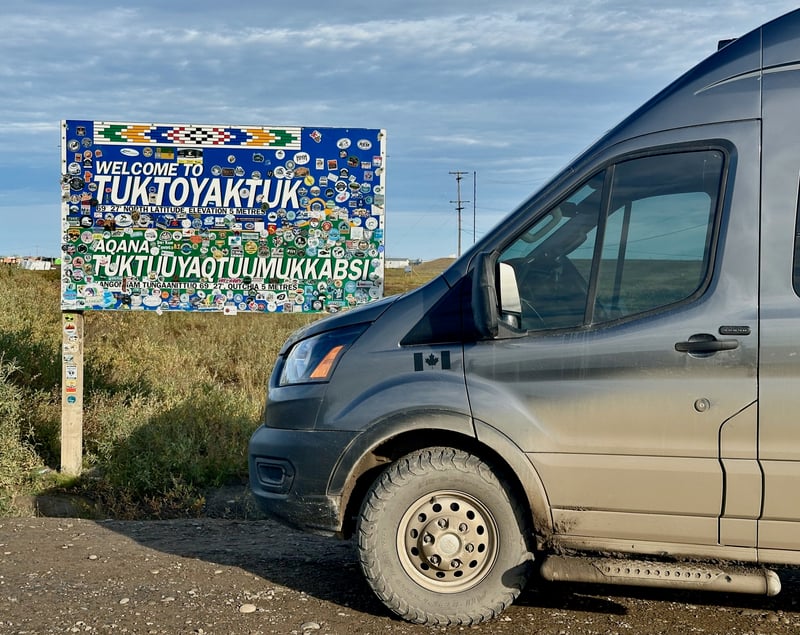
Front bumper: the Transit’s stock bumper has a significantly worse approach angle than the Sprinter’s, and aftermarket replacements fix that while adding spots for a winch and lights. We haven’t been anywhere the approach angle actually stopped us. Van 2 might get something — probably not a full heavy bumper, maybe a nudge bar, which is tubular aluminum that helps give you some protection and mounts lights without the full bumper replacement. I think honestly, unless you’re going into fairly gnarly off road situations regularly, you don’t need this. We’ve been to a variety of BC rec sites with fairly lumpy roads and haven’t worried about our approach angle so far.