Section 7 of 9
Storage
Going 3D
The thing people get wrong is thinking too ‘flat’ about their van storage. Space in a van is three-dimensional. Stuff goes above things, below things, behind things, inside things that are inside other things. Every cubic inch is valuable and should (ideally) be maximized.
Accessibility matters just as much as volume. Best case, every item should be immediately accessible, but this also tends to conflict with maximizing overall storage. As a compromise, having at most one thing in front of another is usually fine. Having to unload half the van to find the dog bowl is not.
Inside the van
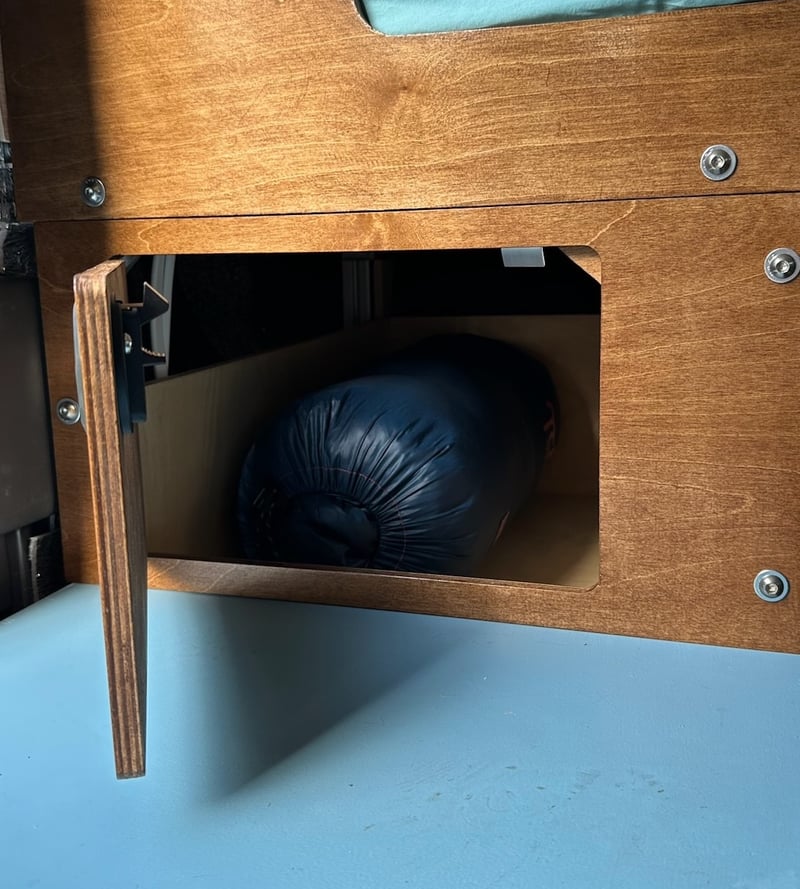
The piece of storage we’re happiest with is what we call our “beer cubby.” Under the passenger-side foot of the bed there’s a stretch of dead space going from the main living area all the way back into the garage. We boxed it in with plywood, added an accidentally-grain-matched door, and it extends back and sits on top of the water tank. Solid enough for heavier items such as tins of food and, you guessed it, beer that isn’t in the fridge yet. Underneath the beer cubby is another small cube-like storage spot, which we use for dog food and dog-related stuff.
The “tech cubby” is our latest addition. We spent too many annoying minutes digging through a fabric box on the floor looking for the Starlink or the drone or walkie talkies, so we built a proper dedicated space for that stuff. The actual build was mostly thinking and a little bit of actual construction, isn’t a huge big deal, but it’s one of those incremental fixes that makes the van nicer to live with.
One specific piece of storage we don’t have is overhead storage above the front seats. Our Transit didn’t come with the factory “headliner sunglasses storage” option that makes that work, and adding it after the fact is more involved than it sounds. What we gain, though, is headroom and openness up front especially when sitting in the swivel seats, and we think this is a good (if accidental) tradeoff.
The garage
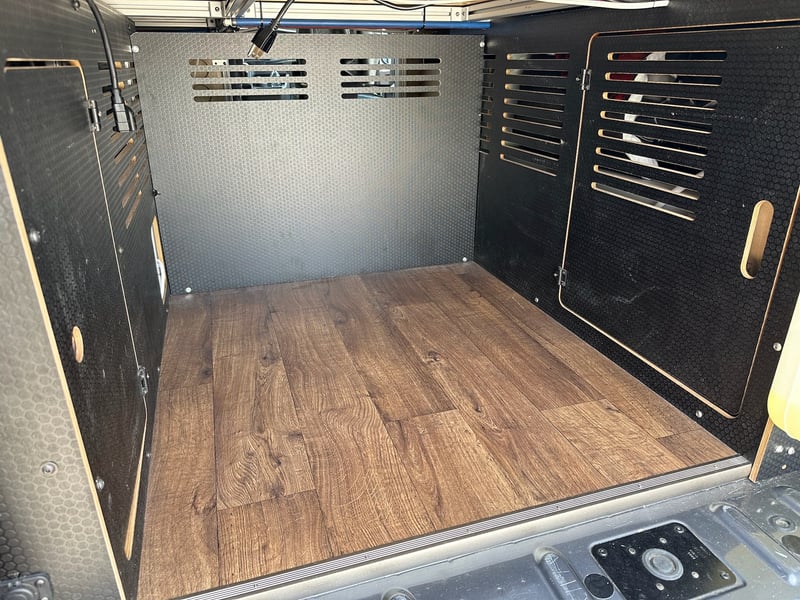
We left the rear garage mostly open when we built the van and figured it out as we went. The left and right sides contain the electrical and water systems, boxed in safely, leaving a large central storage area. After enough trips, we knew exactly what actually lived back there and we built a plywood crisscross divider to match.
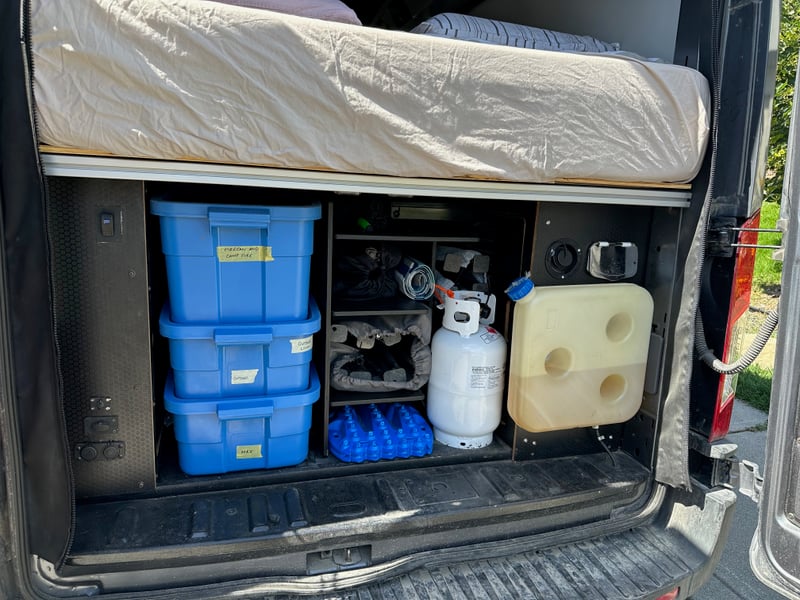
Right two-thirds: long cubbies sized specifically for our gear. Fold-up table, two-person camp chair, outdoor cooking stuff, water accessories, 10lb propane tank, Maxx tracks and recovery gear. Everything slides in using the full depth of the storage space.
Left third: six Rubbermaid bins, each labeled — ‘fix-it’ box, dog box, shoe box, and so on. We sized them by pulling everything out of the van in a Canadian Tire parking lot, measuring the space, and going inside to figure out what combination of bins would actually fit. Not a glamorous process but we did it on a sunny afternoon on Vancouver Island and had fun. The result is pretty great.
External storage
No external storage box yet. A proper ruggedized platform and box for the back of a Transit is a few thousand dollars when done right, and we haven’t quite demonstrated to ourselves that we need it. It’s on the list for this van and would definitely be on van 2 — it adds real capacity without destroying your departure angle, but it’s also expensive and technically adds length to the van (which can cost you on ferries if they measure the vehicle tip to toe).
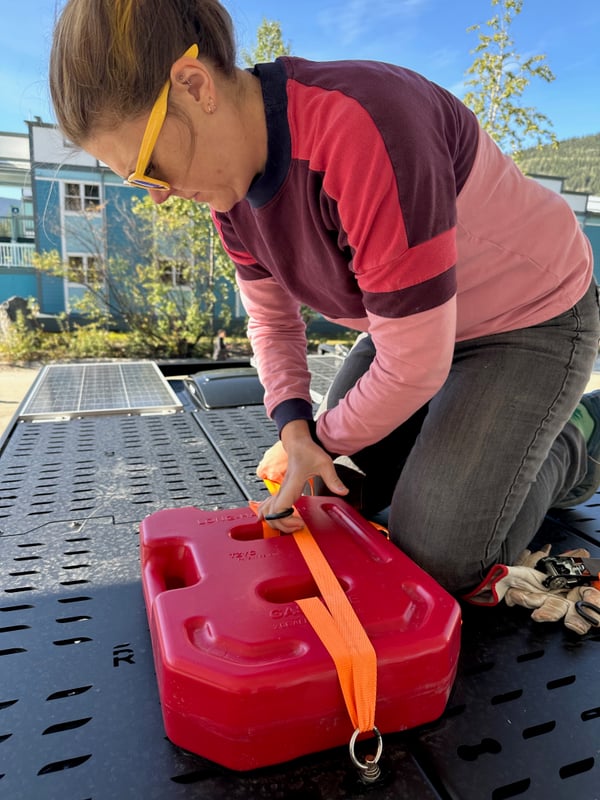
We do have a roof deck with tie-down points. On the Dempster Highway trip we strapped a spare fuel jerry can up there, but we don’t generally use the roof for a lot of storage.