Section 6 of 9
Furniture
Wood vs 80/20
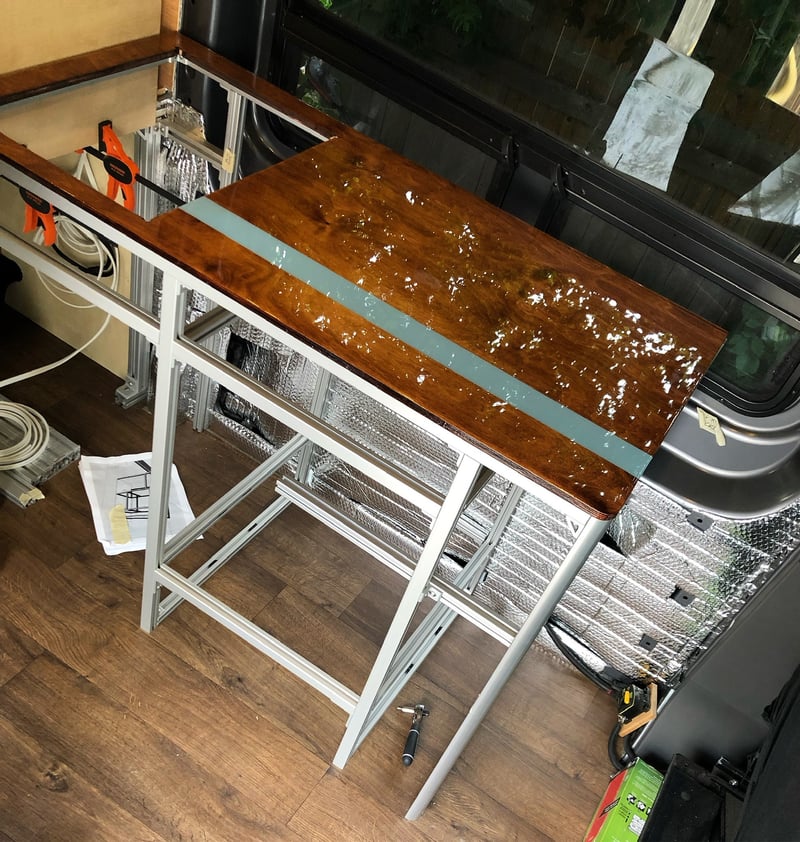
Most van builders go one of two routes: wood and plywood, or extruded aluminum. 80/20 is the main brand name; compatible versions are cheaper and work fine. Some people also mix in IKEA components for bed spans — the Kallax shelving unit turns up in a lot of builds as a bed support because the spans are strong and the price is hard to argue with.
Plywood is completely valid. Well-engineered plywood furniture is strong, workable, and familiar. 80/20 is more like Meccano for adults: cut it to length, bolt it together with industrial hardware, and you get something rigid without having to think about bending loads. In Canada we used Faztek for our 80/20-compatible extrusion — cheaper than the name brand, same profile. We used 15-series for the bed, which is 1.5” square, and 10-series for the galley and bench seat.
People will tell you 80/20 is dramatically lighter than wood. It is lighter, but not dramatically — especially not once you count all the brackets and hardware. Good plywood engineering is also fine, and if you play to plywood’s strengths it doesn’t have to be mega heavy.
How we used it
80/20 for everything at waist height and below: the bed frame, galley, and bench seat. Above that, the upper cabinets are plain wood and plywood. There’s no reason to use expensive aluminum above head height, and you certainly don’t need your cabinet to survive a pull-up. Heavy stuff up high is bad for center of gravity anyway — so light frames, light contents, no regrets.
The bed
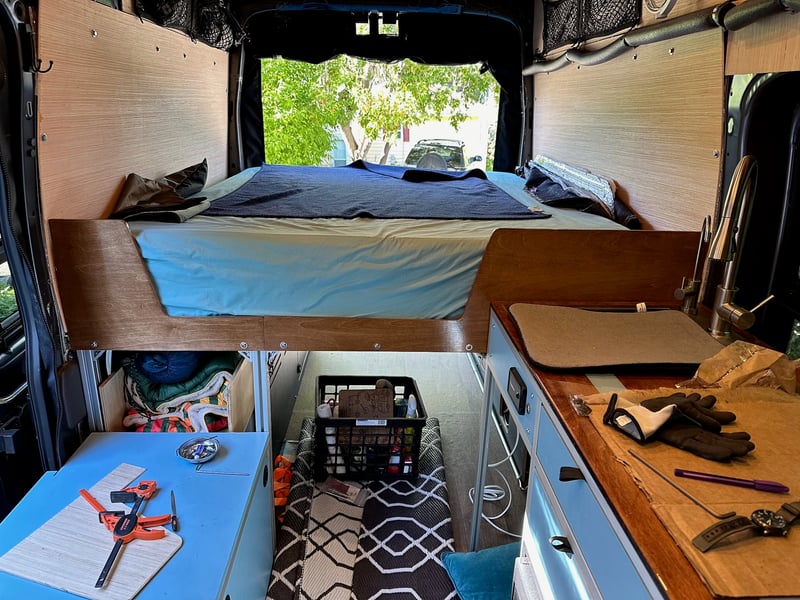
Bed height is one of the more consequential calls in the whole build. You need to be able to get into bed relatively easily, and you need to sit up on the bed it without feeling cramped or hemmed in. We really like the height of our bed and we did take care to measure ourselves sitting at home (against a wall!) to get the height right.
The walls of the bed area we got less right. Thin plywood, which is maybe a bit too bendy, and it’s not perfect. People who properly frame out those walls end up with something more solid and we’d do that differently next time. It’s not terrible but it’s not great either.
No windows back there at all — no rear door glass, nothing in the walls. Once the insulation’s in, the sound deadening is great. Walmart parking lots, no problem. It’s also a Faraday cage back there, so phones tend not to work (which, maybe, is a benefit — less scrolling in bed).
The mattress is a 10-inch Endy memory foam, which is 100% overkill but totally awesome. I think a good 6-inch mattress would probably also be fine, but anything less than that I would be a bit skeptical.
Kitchen and galley
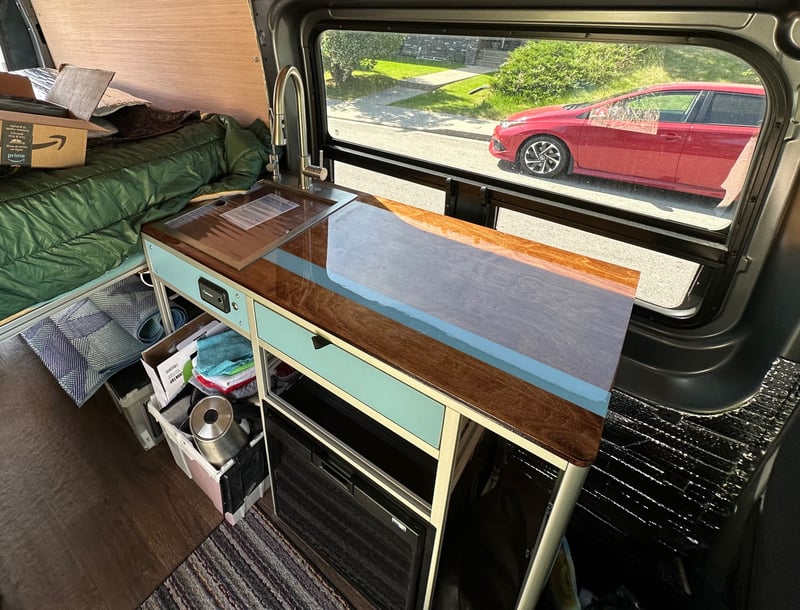
The galley is built around the sink and the fridge, and the fridge ended up on the floor — the one thing we’d actually redo. Bending to the floor to get into a fridge loses its charm fast. Van 2 gets the fridge higher up, or gets a bigger fridge, or both. Our current fridge holds about a week of food, which lines up with how long we’d want to be away from a grocery store anyway.
The pantry, drawers, and under-sink storage all work reasonably well. The tall pantry is a little unweildy and needs care sliding in and out — drawer slides are difficult to get right after the fact.
Actually, this is an area where I would advise some caution: we built the galley incrementally, which was good for figuring out our usage patterns, but bad from the perspective of building a coherent, square, fully-functional unit. If we had a do-over, I think I’d build the galley in a workshop, get everything square and correct and all the drawers and moving parts right, and then install it in the van. We built it in place which added complexity.
Bench seat
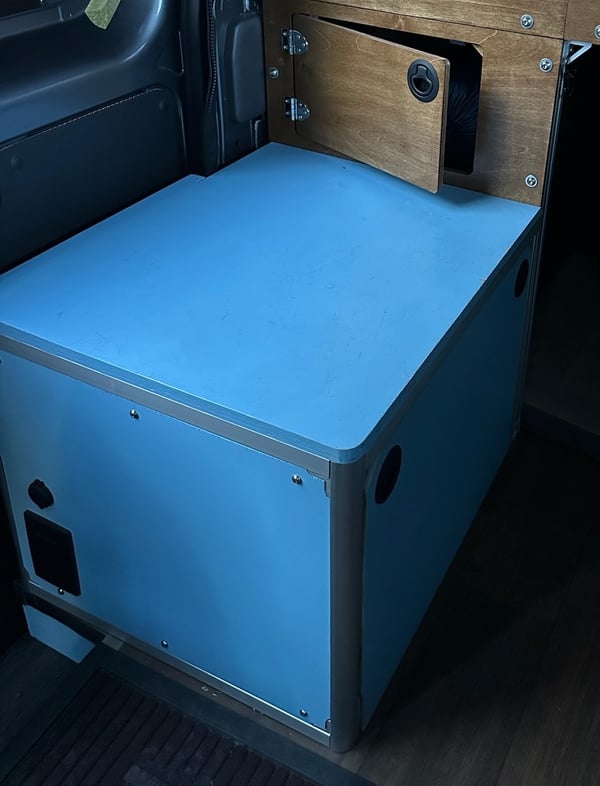
By the sliding door there’s what we call our “bench seat” that hides the composting toilet, which slides out on a heavy-duty drawer. The bench is low enough that it doesn’t block the view through the door. A Lagun table is mounted to the B-pillar using a FarOutRide slimline wall mount, which means one person can sit on the bench and one can swivel the passenger seat around, and you have a surprisingly decent place to eat dinner. The bench also functions as our step up into the bed, which is either clever integration or a happy accident — we’ll say clever.
Upper cabinets and the door cubby
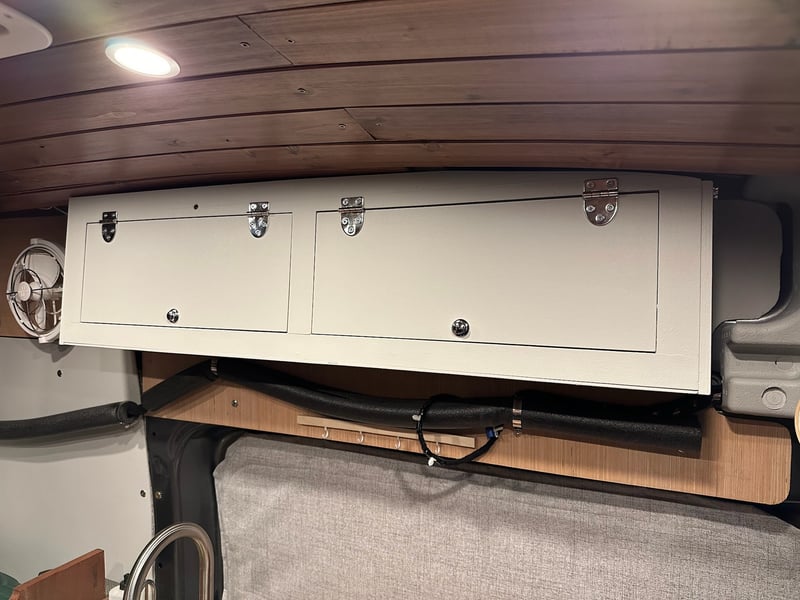
Above the galley we have an eye-level cabinet, and we also have cabinets on either side of the bed area. The head-height cabinets hold clothes, dry pasta, coffee, crackers, basically “chemically inert” foodstuffs. It gets warm up by the van ceiling in summer so you don’t want things that will go bad or melt, and in general you don’t want to put too much weight up high. The cabinets are smaller than they could have been, which is good as a weight reducer and helping us feel like the space is open (rather than taken up by cabinetry).
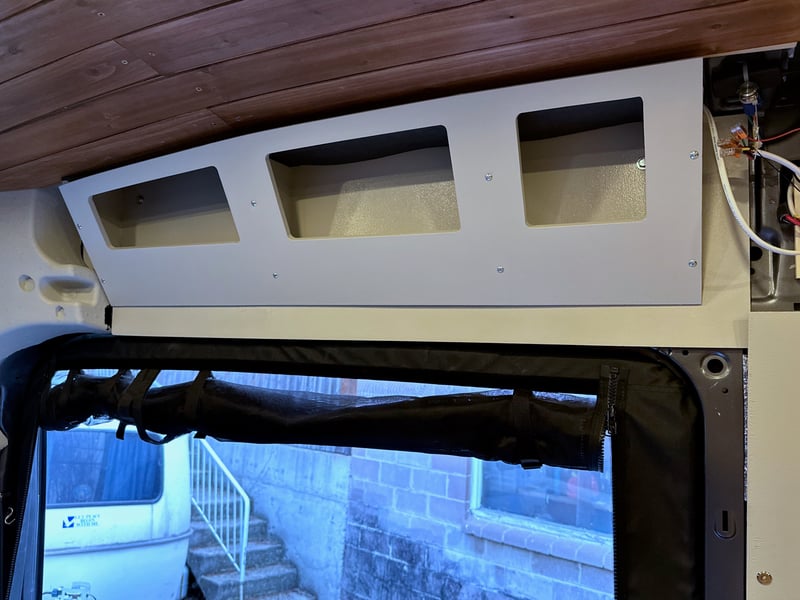
Above the sliding door we built an angled “open cubby” instead of a full cabinet. The Transit’s doorway doesn’t reach the ceiling the way a Sprinter’s does, so headroom at the entrance is already a bit tight. A full overhead cabinet there would make it worse. The cubby holds outdoor stuff — dog leash, headlamps, bear spray, bug spray — things you want on the way out the door.
Cardboard aided design (CAD)
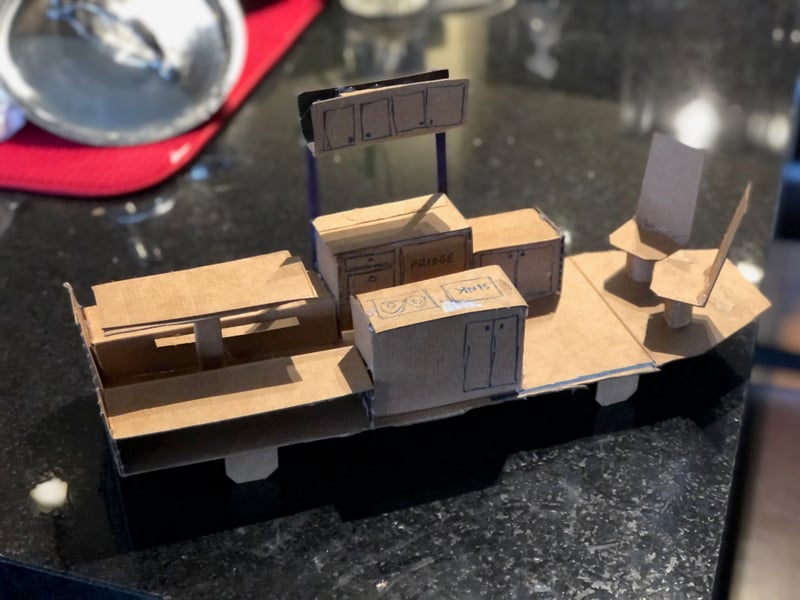
Do this before you build anything! Make cardboard mockups of your furniture in the actual van. George from Humble Road does this on every build, and once you’ve tried it you’ll understand why.
Sketches don’t give you much. Even 3D CAD doesn’t really show you what the space feels like. Cardboard in the real van does.
Our overhead bed cabinets ended up smaller than planned, and we think that was right. Clothes storage is a bit limited and we have a spare clothes storage box in the garage. But we don’t feel hemmed in back there, and that matters more than closet space. One person is always on the bed while the other is cooking — whoever’s not at the stove is either up front in the swivel seat or sitting in the back. Being able to sit up, move around a little, not feel like the walls are closing in — that’s what makes the van livable over months and years. And without CAD we might have built the cabinetry too big and regretted it.