Section 1 of 9
Overview & Specs
The van
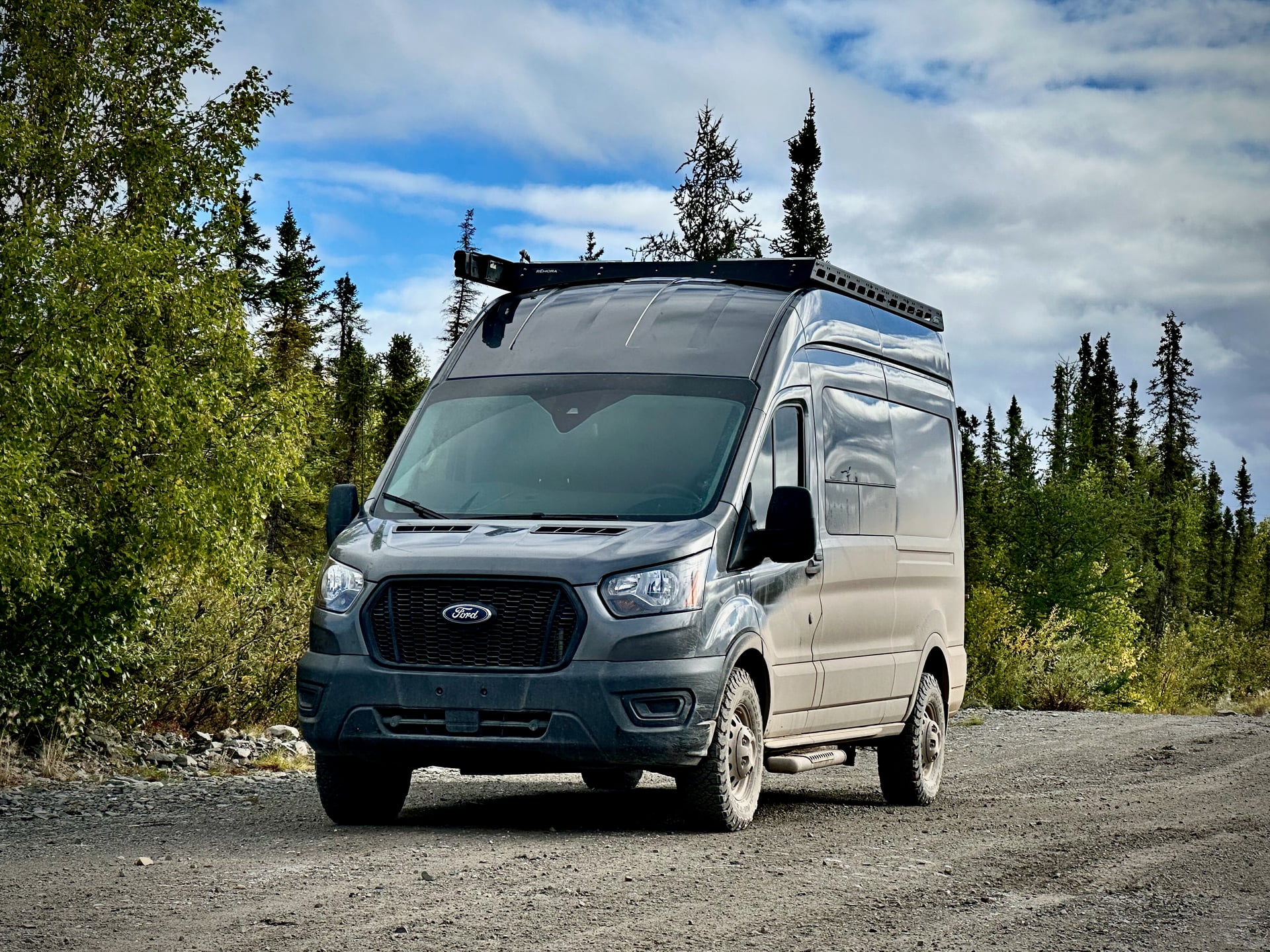
We bought our van deep in the pandemic, which means we didn’t really buy it so much as inherit someone else’s custom order. Another buyer had walked away from a piece of paper in the Ford custom build queue. We couldn’t change a thing about it — we just got what we got, and we had to wait a few months to receive it.
Key elements of the van spec are exactly what we wanted — high roof, not-white — but others are less perfect.
What we got right (lucky)
High roof — non-negotiable. Standing up is not a luxury. If you’re genuinely 5’6 you can get away with a medium roof and gain some fuel economy, but for most people the high roof is the right choice.
148” wheelbase, non-extended. The extended version (“big booty edition”) adds usable cargo length but costs you in maneuverability and parking. The non-extended 148 fits in a standard truck-sized parking spot, without constantly needing to back in and overhang the pavement. It also fits on BC Ferries without the oversize surcharge, depending on whether they’re measuring that day.
Not white. We thought all white vans looked like delivery vans and wanted something different, which was distinctive until Amazon used this color for their fleet. Arguably, “white with graphics or decals” is actually a fine option, especially if you’re going to hot places where a white (or light) paint job reduces heat absorbtion.
Upfitter wiring package and switches. Ford’s upfitter package runs pre-wired circuits to a switch bank in the dash — clean, fused, and ready for accessories. Highly recommend specifying this if you’re ordering new and you’re sure you want certain high-power accessories wired into the main van circuit (light bar, winch, air-suspension, that kind of thing)
4.11 axle ratio. More torque to the wheels at the expense of fuel economy at highway speeds. Worth it for mountain driving. Our Transit never feels underpowered and I think that’s partly the ratio.
GVWR
We have the 9,050lb GVWR package, slightly above the base spec. You probably don’t need to go above 10,000lbs — that’s a very heavy van — but the bottom-of-the-line 8500lb might be too little. Either way we wouldn’t recommend building a van that’s going to push past 9,000lbs loaded.
Ours hits that limit fully loaded: two people, a dog, full water tanks, and a complete Dempster-ready recovery kit. It’s fine and the van is rated for it, but there’s no headroom left.
The weight concern also comes up with brakes, which we get into more on the exterior page.
What we didn’t get
No EcoBoost (turbo). We have the base 3.5L V6, which has been completely fine — but we’d probably spec EcoBoost if we were ordering fresh. More power, arguably better highway fuel economy.
No tow hitch. If you think you’ll ever want one, spec it from the factory because adding a hitch after the fact is expensive annoying. A lot of van builders now use a rear ‘platform’ for bikes, a cargo box, or a spare tire that doesn’t need a traditional hitch receiver, so skipping it is a legitimate call. Just make it consciously.
No CarPlay. We have the most basic Ford infotainment system. It works, and the audio is surprisingly decent, but the screen is tiny. Van number 2 will have CarPlay from the factory.
No adaptive cruise, blind spot alert, or parking assist. These exist on higher trim Transits. Our van doesn’t have them and I think we’d like them on a future van.
Transit vs. Sprinter
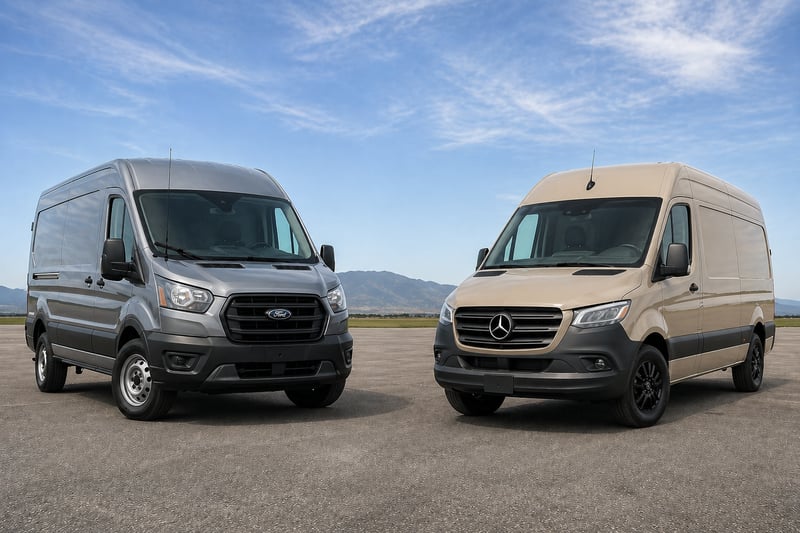
We’re in Canada, which narrows it down fast: if you want 4x4 or AWD in a full-size van, your options are essentially the Ford Transit AWD or the Mercedes Sprinter 4x4 (and more recently AWD). We test drove both.
The Transit drives like a big minivan. The Sprinter drives like a small bus. If you’ve driven both you know what that means; if you haven’t, the Ford is just noticeably more car-like in feel.
Ford dealers are everywhere whereas Sprinter servicing is more specialized and pricier. Sprinter diesel owners occasionally deal with diesel exhaust fluid issues and other sensor problems that can trigger limp mode — less common now, and plenty of people run them without trouble, but “reliable far from home” was part of our evaluation criteria. The Ford is unarguably cheaper than the Mercedes, both to purchase and to service.
One real Sprinter advantage worth knowing: the 144” Sprinter 4x4 has significantly better factory approach and departure angles than the Transit. If serious off-pavement capability is your priority, that’s a real difference. The Transit can be improved — we did improve it — but the Sprinter starts from a better place geometrically.
What about bigger vans?
The Transit 148 extended or Sprinter 170 would give you more living space. We think about this occasionally, especially as we age we expect the extra comfort and space from a larger van to become more desirable. But the mid-size wheelbase fits on ferries without surcharge, parks in normal spots, handles backcountry roads without constant anxiety, and doesn’t feel like you’re driving a bus.
FarOutRide has the most thorough breakdown of the options. OurKaravan makes a well-reasoned case for the Sprinter if you want the other side of the argument. Gear Junkie has a quick Transit vs. Sprinter vs. ProMaster comparison if you want a third opinion.
Cabin upgrades
We ended up solving the lack of CarPlay cheaply, with a dedicated CarPlay screen that sticks on the dash. It’s widescreen, 10 inches diagonal and about 3 or 4 inches high. Ours was around $100. It handles maps and navigation while audio still runs through Bluetooth to the factory speakers. It actually works great and doesn’t require open-heart surgery on the dash.
Replacing the head unit in the Transit is the other option, but it’s not as simple as it sounds. The factory stereo is wired into the steering wheel controls, so you need about $500 worth of integration hardware before you’ve even bought a new unit. That really sucks, you’re basically spending likely half your budget on not-the-head-unit. Annoying.
The real lesson is the same one that keeps coming up: if you want a decent screen, spec it from the factory. Paying Ford’s upgrade price at order time is almost certainly cheaper and cleaner than any aftermarket fix.